
1.Ultra-Fast Dynamic Response & Flicker Suppression
The ZG-dSVG achieves a dynamic response time of ≤4ms — far exceeding traditional SVC systems (typically 20–40ms) — enabling full-range transition between rated capacitive and inductive reactive power within milliseconds. This makes it uniquely effective at compensating the shock reactive currents generated by arc furnaces, rolling mills, mine hoists, and other impulse loads, eliminating voltage flicker at its source and protecting sensitive downstream equipment.
2. High-Efficiency Operation with Near-Zero Harmonic Output
The system features high operational efficiency and superior harmonic characteristics. Its main circuit employs an H-bridge cascaded multilevel topology, delivering an output waveform of exceptional quality. It generates extremely low intrinsic harmonics, thereby causing no secondary pollution to the power grid. The device operates with higher efficiency than traditional SVC equipment, resulting in lower overall energy consumption during long-term operation.
3.All-in-One Power Quality Solution
A single ZG-dSVG unit simultaneously achieves the following functions:
a.Dynamic Reactive Power Compensation: Bidirectional continuous regulation (inductive/capacitive), ensuring a post-compensation power factor of ≥0.99.
b.Harmonic Filtering: Filters out 2nd through 50th-order harmonics with precise, targeted mitigation.
c.Three-Phase Imbalance Correction: Reduces three-phase current imbalance to <5% after compensation.
d.Voltage Fluctuation Suppression: Stabilizes busbar voltage and effectively handles impact loads.
e.Voltage Flicker Elimination: Ensures stable power supply for precision equipment and sensitive loads.
f.Traditional solutions require multiple separate devices to address these issues individually; the ZG-dSVG integrates all these capabilities into a single unit, thereby significantly reducing system complexity and procurement costs.
4. Modular Cascaded Architecture: Flexible Capacity Expansion Without Downtime
Featuring a modular cascaded architecture that offers flexible scalability, the main circuit is constructed by cascading identical power units to form a converter chain. For instance, a 10kV system is configured with 10 to 12 power units per phase, while a 6kV system utilizes 6 to 8 units per phase. This design allows for flexible configuration based on specific on-site capacity requirements and supports capacity expansion through the parallel operation of multiple units.
5. Comprehensive Voltage Coverage: Dual Indoor and Outdoor Configurations
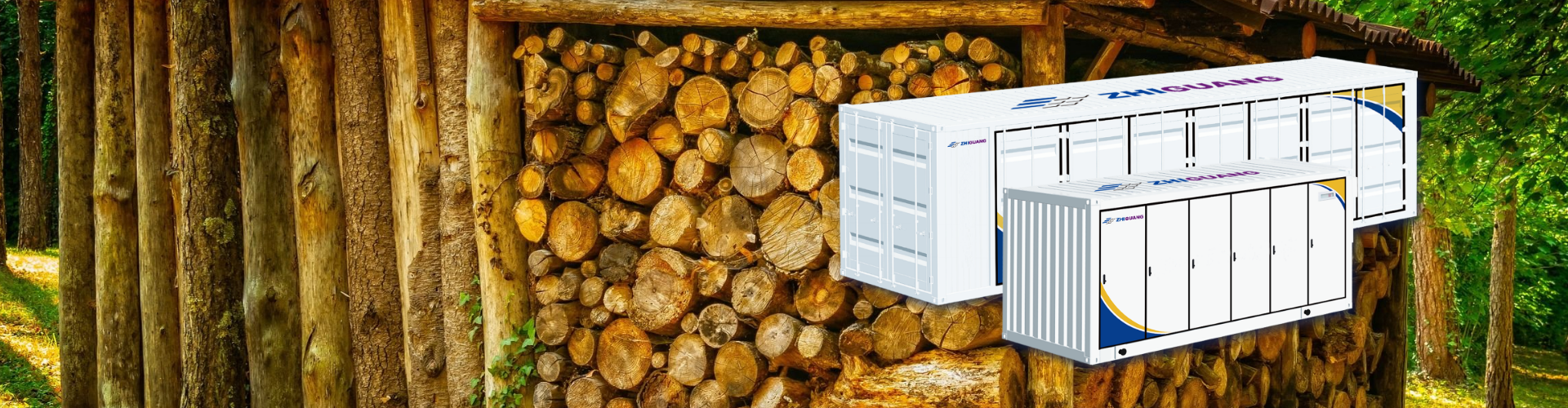
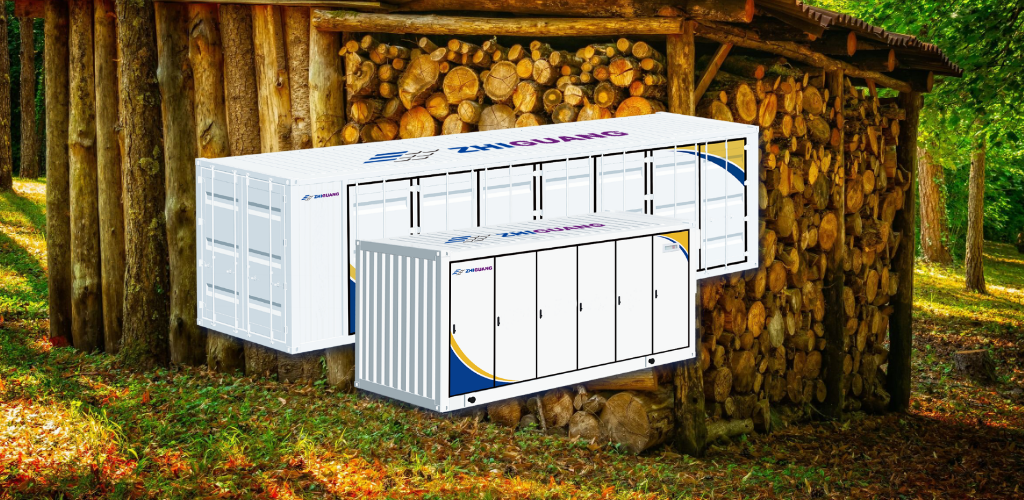
Offering comprehensive voltage coverage, the product range encompasses voltage levels of 6kV, 10kV, and 35kV, as well as step-down series (35/10kV, 35/6kV). Rated compensation capacities are fully customizable, ranging from a few hundred kvar up to 80 MVA for a single unit. The system is available in various configurations—including indoor, outdoor containerized, and water-cooled types—to seamlessly adapt to diverse substation connection scenarios.
6.The ZG-dSVG features exceptional low-voltage operational characteristics and plays a significant role in enhancing the low-voltage ride-through capabilities of wind farms.
Even when the grid voltage drops to 20% of its rated value, the device remains capable of continuously outputting its rated capacitive reactive current, thereby satisfying the stringent requirements for Low Voltage Ride-Through (LVRT) and High Voltage Ride-Through (HVRT) stipulated in national grid interconnection technical specifications. When deployed at the grid interconnection points of wind farms and photovoltaic power stations, it effectively prevents reactive power backflow, stabilizes the voltage at the point of interconnection, and enhances the reliable grid integration capabilities of new energy generation systems.
7.Fully Digital Intelligent Control with Remote O&M Support
Featuring intelligent control and remote O&M capabilities, the system is equipped with a fully digital control system and an LCD touchscreen HMI. It supports real-time data display (via curves, bar charts, and tables), historical data retrieval, and alarm logging. Furthermore, it supports RS485 and fiber-optic communication, allowing for integration into SCADA systems to enable remote monitoring and unattended operation.
8.Multiple Protection Mechanisms: No Risk of Resonance
Comprehensive Safety Protection: Featuring multiple built-in hardware and software safeguards—including protection against overcurrent, overvoltage, overtemperature, phase loss, and phase sequence errors—the device operates in current-source mode. This design eliminates the risk of resonance with the system impedance, ensuring high safety and reliability.